


THE ADVENTURE OF THE PIAGGIO PEGNA P.C. 7


The ultimate aerodynamic
It was an adventure for both of us: that of the real hydroplane and that of our group of model makers. An aero-nautical adventure that of the airplane, in this case it is necessary to separate the two terms since the model is a kind of flying amphibian; a technological and stylistic challenge the one attempted by Eng. Giovanni Pegna who, for the construction of a competitive aircraft in view of the participation in the Schneider Cup in 1929, had adopted innovative and stylistically aerodynamic solutions. His guiding principles were the elimination of mechanical complications and the "refinement of lines": technology and style projected to reach maximum speed. The very tapered lines, the elongated nose, the elimination of floating boots and the slender dimensions made it similar to a very elegant dragonfly that should have hovered over the water and splashed in the sky at full speed, almost embodying the ideals of Futurist poetry. Futuristic solutions, almost unthinkable at the time, an ideal that leapt beyond the possible and unfortunately exceeded too much the limits imposed by the technical availability of that moment.
The duckling that did not fly.


These ideas were obviously not a bolt from the blue for Eng. Pegna, but also the result of previous experiences with land aircraft such as the P.2 and more traditional seaplanes, but always with very light and elegant lines, such as the P.3; however, after some technical tests by the test driver Dal Molin, the technical problems, never resolved, together with the lack of support from the engine manufacturers, led to the withdrawal from participation in the Corsa Schneider and then to the abandonment of the project. Be that as it may, it is in this romantic attempt of his, like an Icarus who has gone too far beyond his power, the inscrutable and fantastic attraction that holds the P.C. 7; a challenge to the unimaginable which, even if it did not materialize, retains intact all the charm of the courageous technical and stylistic daring and the ethereal and blue shape like the water and the sky that it had to plow.
The modeling adventure.
Even our Modeling Group metaphorically chased the dream of the Piaggio Pegna PC7 when, in 2014, Engineer Aldo Scotti, head of the organization in Crema of the exhibition "THE FASTEST IN THE WORLD", on the anniversary of the 80th anniversary of the speed record obtained in 1934 by Franceso Agello aboard the legendary Macchi Castoldi MC 72, through the then President of our Sorexina Modeling Group Mr. Stefano Merli, he contacted us to make a rather large scale and possibly different from the usual model, let's say, original and significant also of the period in which the exhibition was located, where objects and works of Futurist art were also exhibited. I remember that I immediately enthusiastically adhered to the idea (the mere fact that Francesco Agello was born in my own country of origin, Casalpusterlengo, made me proud); I also interested three or four other friends and associates in the project and taking the advice of Eng. Aldo the choice turned to the Piaggio Pegna in question because of its futuristic innovativeness that well represented the atmosphere of the era of those years marked by the excitement of speed and by the myth of the hydrocorsa, depicting similar to a Ferrari of the Sky, an ideal of collective imagination of mechanical heroism.
We put ourselves to work without hesitation and collected various iconographic material and those few drawings available on the net, we made our project for the realization of a 1: 8 scale model approximately. Personally, I made the wooden structure with frames on the type of naval modeling and then covered in balsa and aeronautical plywood, of which I had found some last sheets in a dynamic model aircraft shop (who knows if they still do it?); the wings and other parts were also made, such as the hydrofoil-like fins, shaped in plywood. The marine propeller, front fairing, and dashboard were made of plastic by Pierluigi; the nose cone and the front propeller were produced in wood with the lathe by Enzo Poli; Friends Claudio and Pier Paolo participated in the creation of other details and in the painting in the typical red of hydro races. On balance then all the other members were at least involved since we talked about it at the meetings and we discussed how to make the parts.
Fotogallery Work in progress


THE IDROPLANE P.C.7
Brief historical-technical notes on the Piaggio Pegna P.C. 7 taken from Wikipedia.
The P.C.7 represented the latest evolution of the Piaggio seaplane series, which began with the P.C.1. Designed by engineer Giovanni Pegna, it adopted very innovative technical solutions. While stationary, the P.C. 7 was comparable to a central hull seaplane, as the buoyancy function was entrusted to the fuselage, equipped with two watertight bulkheads. In this situation, the propeller remained partially submerged. There was a second small propeller, placed in the terminal part of the aircraft, with the function of making maneuvers and take-off possible. For testing, numerous propellers were used. Of the front one, three-bladed, three were ordered with variable pitch, in steel, made by Standard Steel. Three other propellers, in durallumion and also three-bladed, were made by Caproni. The latter adopted three different fixed steps. The rear propeller, with two blades and variable pitch, was also made of duralumin.
Under the fuselage there were three fins, two in the front, between the nose and the wings, and a third in a rear position, near the rear propeller. These fins were the subject of intense studies by Pegna, who carried out numerous tests with scale models to arrive at the ideal design. FIAT was supposed to supply both the transmission and the engine, the latter with a power of 1 000hp, but withdrew from the project. The decision was made for an Isotta Fraschini engine, an 800 HP V6, which was later limited to 2 600 rpm. The aircraft was of wooden construction, with extensive use of plywood. In addition to the fuselage, the wings and ailerons were also watertight.
The dynamics
To take off, the pilot operated the rear propeller. Reached a certain speed, the flaps lifted the aircraft, similar to a hydrofoil. At this point, the pilot operated the main propeller, which was to make the P.C. 7 detach from the surface of the water. In the take-off phase, the clutches, one for each propeller, played a delicate role. They worked together, gradually transferring power from the rear to the front propeller. For ditching, even at high speed, the fins should have guaranteed a positive thrust sufficient to avoid overturning.
Technical problems and abandonment
In 1929 the test pilot Tommaso del Molin (silver medal for aeronautical valor) managed to carry out some tests, using only the rear propeller. The aircraft, in this condition, had a behavior similar to a hydrofoil. The fins, which remained submerged, kept the nose of the P.C. 7 above the surface of the water; even though it never managed, during the tests carried out, to make a real take-off. The clutch acting on the rear propeller showed several problems during engagement, including copious oil leaks inside the fuselage. In these situations, the engine lost power, and sufficient thrust was lacking to keep the aircraft lifted. The technical problems, which were never completely resolved, led to the abandonment of the project for the rescission of the contract by the R. Aeronautica. Termination contemplated in the event that the aircraft could not be built in time for the races. The lack of time to remedy the mechanical problem prevented the aircraft from being efficient for that year's Schneinder Cup, forcing the designer, in spite of himself, to prematurely interrupt the tests on the aircraft, interrupting development forever. of the same.
While writing Eng. Pledge of her own desire to continue developing his creature:
"However, I believe I can resume this work that fascinated me so much, and indeed I have the keenest hope of completing it and perhaps of translating it into a machine for practical use, ..."
(Giovanni Pegna from: Some ideas on racing seaplanes. Publ .. in The Airplane 1931)
so it will not happen. The prototype will remain the only project of this type ever made by Engineer Pegna.
The exhibition
"THE FASTEST IN THE WORLD".
Taken from the exhibition held in Crema in 2014 -

"Rapidity, rapidity, joyful victory over the sad weight, aerial fever, thirst for wind and splendor, spirit multiplied in the bone mass, Rapidity, the first born from the stretched arc called Life!". We turn to Gabriele D'annunzio to best introduce The fastest in the world, from the speed record to the airbrushers, the series of events that will take place from 25 October to 2 November in
Crema remembering Francesco Agello and his unrivaled speed record. World record On 23 October 1934 on board the Macchi MC-72, Agello achieved the world speed record for a piston engine seaplane, reaching 709.209 km / h in flight. Following this event, the national and international press gave him the nickname "fastest man in the world". A record still unbeaten today. Francesco Agello, gold medal for valor, born in Casalpusterlengo, lived in the Cremasco area after his marriage to Gianna Manenti celebrated in the Cathedral of Crema. The exhibition On the occasion of the 80th anniversary of the record, the municipal administration of Crema, in collaboration with various associations, organizes an exhibition which, starting from the Agello company, tackles the history of the Schneider Cup and the high-speed department of Desenzano del Garda, re-reading the myth of speed in the 1900s from a historical, artistic and literary point of view
Image gallery of the exhibition "The fastest in the world" in Crema in 2014

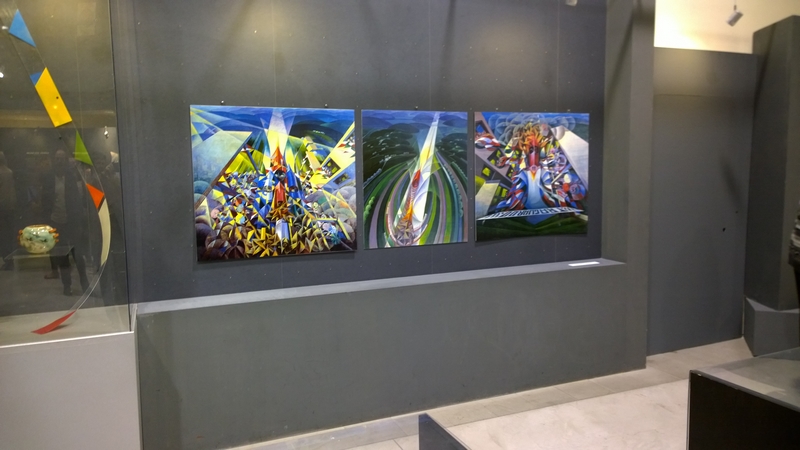


A comic by Alessandro Colonna remembering the enterprise and a postcard with the first day of issue cancellation and relative postage stamp were also created for the event.


Pilot:_Francesco Agello
A lot has been written about Francesco Agello and his record, but sometimes a few lines are enough to define his character: in memory of the undisputed ace of the record and of the RAV, High Speed Department of Desenzano, I would like to report these brief notes about him written in occasion of the 80th anniversary of the record:
L’uomo più veloce del mondo: l’80° anniversario del record di Francesco Agello 1934-2014
Watch the video and read other articles at the links below.
